Your First Esports Event Abroad: Build a Budget That Survives Reality
4 min read
MAKE IT YOUR READSaved
Plan an esports trip around entry requirements, official tickets, total costs and a workable disruption plan.
The ticket price is rarely the full cost of attending an esports event abroad. Flights, accommodation, local transport and changes can turn an apparently affordable weekend into a difficult commitment. A useful travel budget should tell you not only whether you can pay for the plan, but whether you can cope if the plan changes.
This is a planning framework, not a destination recommendation, visa determination or live quotation. Every example is hypothetical. Confirm current entry rules and event information before paying. No booking partner has sponsored this guide, and it contains no affiliate travel links.
Establish that the trip is possible
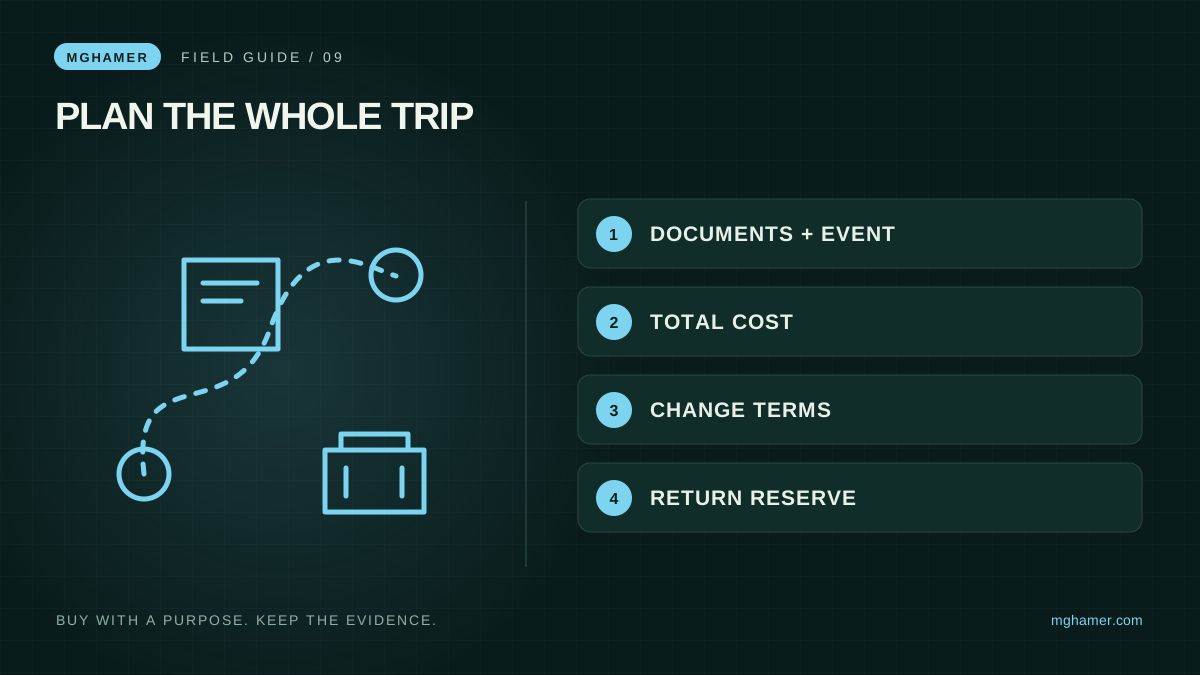
Use the event organizer's official page to verify the venue, dates, ticket seller and what your ticket actually admits you to. A festival pass, a particular final and an additional activity may have different access rules. Save the terms attached to the purchase, not just the announcement graphic.
Check requirements using your actual passport, residency and transit itinerary. IATA's Travel Centre provides personalized passport, visa and health requirement information; destination authorities and your airline remain important sources for the exact trip. A friend's successful journey does not establish your own eligibility.
Avoid building a budget around a visa assumption or a single unverified schedule post. Identify what must be confirmed before non-refundable spending. If an organizer changes a venue or date, revisit the entire itinerary rather than updating only the calendar entry.
Build the total before choosing the hotel
Create separate lines for travel, admission, accommodation, local movement, meals, connectivity and contingency. Include baggage, airport transfers and payment or exchange charges where applicable. Write down the currency beside each quote so you do not accidentally compare different units.
Here is an arithmetic example, not a market estimate: transport 300, ticket 80, three nights at 70, daily expenses of 35 for four days and local transfers of 50 total 780 currency units. Adding a chosen 120-unit reserve brings the planning ceiling to 900. Replace every input with your own quotes; the example does not claim those prices are available anywhere.
Distinguish money paid now from money needed during the trip. A card hold, refundable booking or pending refund can affect what remains available even when it is not the final cost. Keep enough flexibility for the return journey instead of treating the last spare amount as merchandise money.
Buy location and flexibility deliberately
Compare accommodation by the real route to the venue at the times you will travel. A cheaper room can lose its advantage through repeated transport costs or an impractical late return. Check the event's expected finishing time, transport options and the accommodation's check-in arrangements.
Read cancellation and change terms before deciding whether a cheaper non-refundable option is worth it. The answer depends on how certain your documents and schedule are. Do not assume an event cancellation automatically refunds an unrelated flight or hotel; each booking has its own terms.
If sharing costs, agree who books, who pays and what happens if one person cannot go. A simple written split avoids arguments when a room becomes more expensive per person. Keep essential confirmations accessible without relying on a single phone's connection.
Make a disruption plan you can afford
Ask three questions: what if departure moves, what if the event changes and what if you need an extra night? Identify practical alternatives and the money they would require. Review any insurance wording for the circumstances you care about; a policy name alone does not tell you what is covered.
Set a stop point before spending. If the confirmed total exceeds your comfortable ceiling, reduce the plan, choose a future event or watch remotely. Attendance should not depend on hoping that every uncertain cost will be the cheapest possible version.
After the trip, record the actual total and which estimates were wrong. That becomes a better starting point for your next event than another person's highlight video. The goal is to enjoy the competition while keeping control of the journey around it. A realistic budget protects that experience because it makes the difficult decisions before you are standing in an airport.
Sources & further reading
What did you take away?
Real reactions. Thoughtful discussion. Every comment is reviewed before it appears.
Loading reader contributions…
Sign in to join the discussion