Before the spotlight: MENA players who changed esports history
4 min read
MAKE IT YOUR READSaved
Miracle-, GH, Msdossary and Mohamed Light show how players from Jordan, Lebanon, Saudi Arabia and Egypt helped shape global competition.
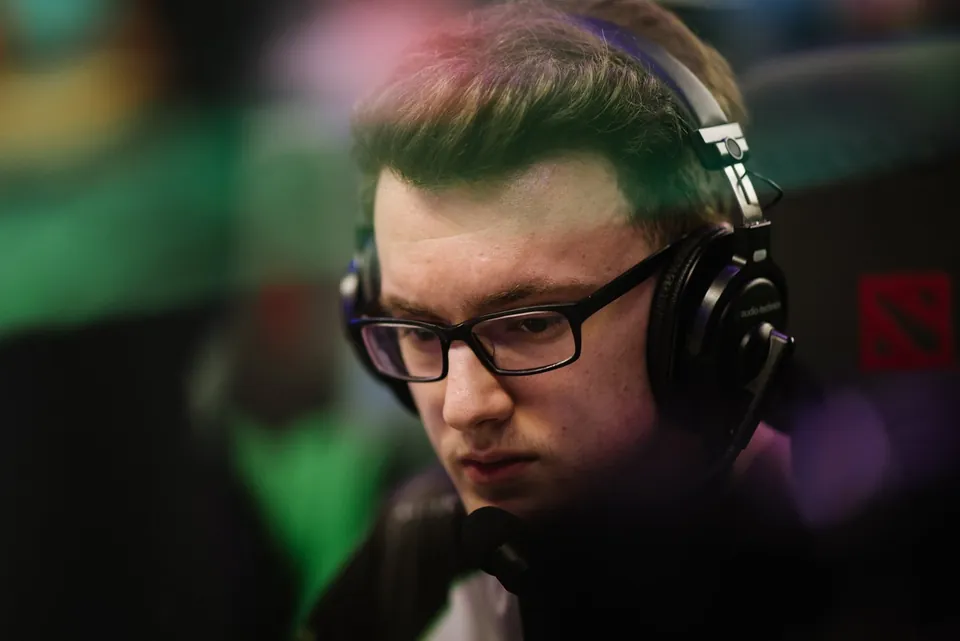
MENA’s esports story cannot be told through arenas and investment announcements alone. Players from the Middle East and North Africa were already leaving their mark on international competition before the region’s recent wave of large festivals. Their achievements offer a different starting point: results earned inside the game.
This is a selection of landmark stories, not an exhaustive ranking of the region’s greatest players. It follows three very different competitive worlds: Dota 2, football simulation and mobile strategy. Together, they show why there is no single route from a local gaming community to a world title.
2017: Miracle- and GH lift the Aegis with Liquid
Team Liquid won The International 2017 with a roster that included Amer “Miracle-” Al-Barkawi and Maroun “GH” Merhej. Miracle- has Jordanian-Polish roots, while GH is Lebanese. They won as part of an international club roster, not a national team representing one country.
Liquid’s own account describes a recovery through the lower bracket after losing to Invictus Gaming, followed by a 3–0 grand-final victory over Newbee. Miracle- and GH shared that title with KuroKy, MATUMBAMAN and MinD_ContRoL: a reminder that even the most memorable individual talent depends on a functioning team.
For regional fans, the significance was tangible. Players with connections to Jordan and Lebanon belonged on the same championship stage as the game’s established stars. Our reading of that moment is not that one trophy solved the region’s development challenges, but that it provided an unmistakable example of what its players could achieve.
Why GH’s story matters beyond the highlight reel
Before that championship, Liquid’s April 2017 profile described GH as a Lebanese player whose arrival strengthened the team’s support play and helped create space for Miracle-. That is a useful counterweight to histories built entirely around the player who delivers the final hit.
Support decisions can determine whether a carry gets to play the game at all. Recognising GH alongside Miracle- makes the story more complete: the region’s contribution was not confined to one role or one kind of spectacle. For young players watching, teamwork and decision-making deserve a place beside mechanical skill in any account of success.
2018: Msdossary turns football gaming into a world title
Saudi Arabia’s Mossad “Msdossary” Aldossary became FIFA 18 world champion in London in 2018. EA’s account records a 4–0 aggregate victory over Stefano Pinna in the final, following his FUT Champions Cup Manchester win earlier that year.
His breakthrough matters because it sits outside the PC games that often dominate esports histories. Football simulation has its own competitive demands and audience. A world title earned in that discipline belongs in the regional record just as much as an Aegis or a tactical-shooter championship.
The broader lesson is to follow the games that communities actually play, rather than judging a region’s strength through one title alone.
2022: Egypt’s Mohamed Light brings mobile esports into focus
Mohamed Light won the 2022 Clash Royale League World Championship, as confirmed by Supercell’s championship announcement. The Egyptian player’s achievement adds North Africa and mobile competition to this selection of milestones.
It also challenges a narrow picture of an esports professional sitting exclusively at a high-end PC. The platform changes, but the pressure of preparation, adaptation and tournament execution remains. His title is a reason to take mobile competition seriously as a source of regional talent, rather than treating it as an appendix to console and PC history.
The legacy is bigger than a list of winners
These results did not happen in one city, under one organisation or in one game. That diversity is the point. MENA includes different national scenes, languages, resources and paths into competition; a success in one part of it should not erase the others.
Our conclusion is that players supplied the evidence of competitive potential. The continuing challenge is to make opportunities repeatable, so another talented player does not need an exceptional story merely to reach the starting line.
Historical feature researched October 8, 2026. The selection focuses on the milestones described, not the players’ complete careers or current rankings.
Sources & further reading
- Valve — The International 2017 championsdota2.com
- Team Liquid — Liquid wins The International 2017teamliquid.com
- Team Liquid — Redemption: TI to now (GH profile)teamliquid.com
- Red Bull — The making of Miracle-redbull.tv
- EA Sports — Msdossary wins the FIFA 18 eWorld Cupeasports.com
- Supercell — 2022 world championssupercell.com
- Liquipedia — Mohamed Light biography and resultsliquipedia.net
What did you take away?
Real reactions. Thoughtful discussion. Every comment is reviewed before it appears.
Loading reader contributions…
Sign in to join the discussion