Ancient Egypt in Assassin’s Creed Origins: beyond the pyramids
4 min read
MAKE IT YOUR READSaved
What Discovery Tour reveals about the strengths and limits of exploring history through a game world.
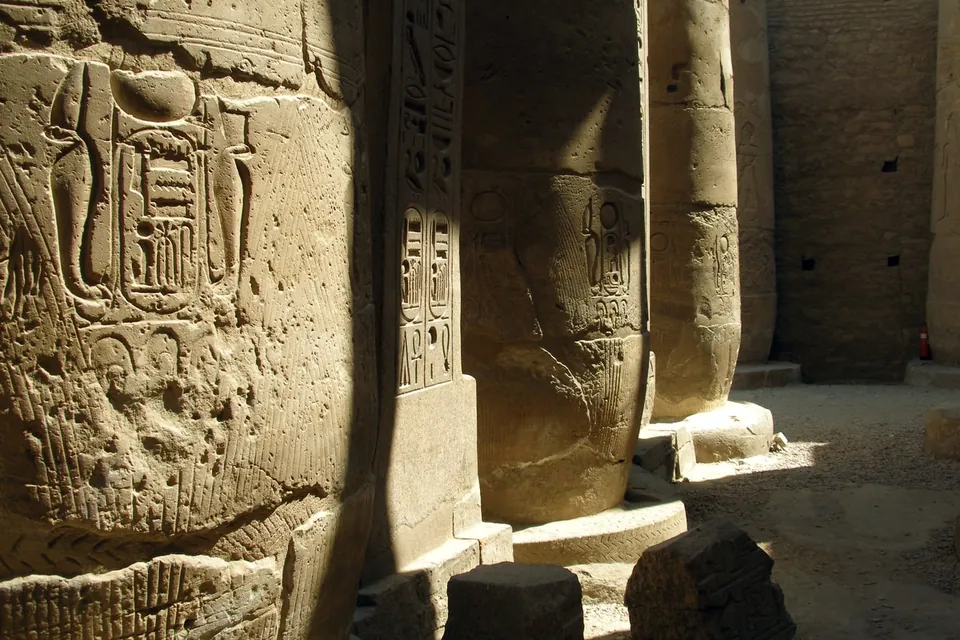
A pyramid is easy to recognise. A society is harder to imagine. That difference is the most interesting challenge facing a game set in ancient Egypt. A spectacular skyline can establish a location in seconds, but understanding a place requires attention to the people, work and ordinary spaces around its monuments.
Assassin’s Creed Origins offers a useful case study because its world can be approached in more than one way. This feature focuses on Discovery Tour and the cultural questions it raises. It is not a claim that a commercial game can replace archaeology, nor that a convincing reconstruction automatically becomes historical evidence.
When the objective changes, the world changes
Ubisoft describes Discovery Tour as a combat-free mode with guided material curated by historians and Egyptologists. Its introduction names subjects including pyramids, Cleopatra and mummification, alongside free exploration. Those are the documented features; their value depends partly on how a visitor uses them.
Our reading is that removing combat changes what a player notices. A street no longer has to be a route towards an encounter. A building does not have to contain an objective to deserve attention. The environment can become the subject of the visit rather than the instrument for completing it.
The difference between seeing and understanding
An interactive reconstruction offers something a photograph cannot: the opportunity to change viewpoint and choose a path. Distance becomes an experience. A visitor can ask how a landmark relates to the surrounding space instead of encountering it as an isolated postcard.
Yet freedom of movement is not the same as freedom from interpretation. Someone selected the scale, colours, sounds, crowd behaviour and accessible areas. Even the parts that feel incidental are choices. The convincing quality of a scene can make those choices harder to notice, precisely because the visitor is enjoying being there.
Read the reconstruction in three layers
A useful method is to separate evidence, reconstruction and gameplay convenience. Evidence might be an object or a documented feature. Reconstruction connects surviving information into an inhabitable whole. Gameplay convenience helps the audience move, see or understand. The categories can overlap, but asking which is doing the work makes the experience more thoughtful.
Imagine pausing in front of a doorway. Instead of asking only whether it looks authentic, ask what supports its appearance, what had to be inferred and what was designed for navigation. This is a proposed exercise, not a verdict on that specific doorway. The point is to replace a simple “accurate or inaccurate” reaction with more useful questions.
A regional audience deserves more than exotic scenery
For an Arabic-language publication, Egypt should not appear only as a mysterious backdrop waiting to be discovered by an outsider. Coverage can attend to the difference between a civilisation, a modern country and the many people who interpret its past. None should be treated as interchangeable.
That means resisting familiar shortcuts in our own writing. A glowing monument is not an explanation of a society. Describing something as timeless can erase the changes that make its history interesting. We would rather ask what the game encourages us to notice, whose work makes the setting legible and where a reader can continue learning beyond the screen.
What competitive players can bring to the visit
An esports player often studies space with unusual care: lines of sight, routes, bottlenecks and the consequences of a position. Those habits can make a virtual historical visit engaging too. The important adjustment is to stop treating every place as a problem to optimise.
Try taking a route because it interests you, then returning by another path. Notice what you missed when looking only for the next destination. This does not turn map knowledge into historical expertise. It simply uses an existing attentiveness to space as the starting point for a different kind of curiosity.
A practical way to explore
Choose one tour rather than racing through everything. Write down one claim you learned and one question the reconstruction left unanswered. Then consult a museum collection or an Egyptological publication about that question. Comparing the two experiences is more rewarding than demanding that either medium do the other’s job.
Origins matters here because a game can create the desire to look more closely. Its most valuable cultural effect need not be a collection of facts remembered after a session. It can be a changed habit: seeing a monument as the beginning of a question about a living society, rather than the end of the picture.
Sources & further reading
- Ubisoft — Discovery Tour and ancient Egyptnews.ubisoft.com
What did you take away?
Real reactions. Thoughtful discussion. Every comment is reviewed before it appears.
Loading reader contributions…
Sign in to join the discussion