Automated narration using browser voices. Quality and availability vary by device; your voice provider may use an online service.
A deeply reported guide to CS2 skins, record sales, Steam pricing, collector loans, market risks and the rules that shape the economy.
Valve Corporation / Steam Community Market — Counter-Strike 2 item renders, accessed 19 October 2026. Representative renders used for editorial identification; no generated images.In this article
This feature separates reported completed sales, public Steam buy orders and private-market estimates. They are not interchangeable. A listing is not a sale; a rejected offer is not a sale; and a Steam Wallet price is not a cash-out quote. Nothing here is investment advice.
The strange idea at the centre of the market
Counter-Strike skins are digital finishes for weapons, gloves, knives and other items. They do not increase damage, accuracy or movement speed. Yet some are traded for the price of a car, a home deposit or—in the rarest reported private transactions—more than one million dollars.
That sounds absurd until the object is broken into its parts. A skin is not simply an AK-47 with blue paint. It can be a particular weapon, from a particular collection, in a particular exterior condition, with a particular float value, pattern seed, StatTrak counter, sticker configuration, tournament provenance and cultural story. In an ordinary game, cosmetics are mass-produced decoration. In CS2, some items are closer to numbered collectibles: the individual instance is part of the product.
The market has several overlapping audiences. Players want a loadout that feels personal. Collectors hunt condition, rarity, patterns and historic sticker crafts. Traders price the gap between bids, listings and demand. Creators and pros turn a visible inventory into part of a public identity. Speculators sometimes buy skins because they believe scarcity and demand will make them more valuable later.
Those groups do not have the same goal. A player may happily pay a premium for a clean-looking float. A collector may value an exact sticker placement that a normal buyer ignores. A trader may avoid both because the item will be difficult to sell quickly. That is why a single price tag is often the least useful thing to know about a high-end skin.
First rule: a CS2 skin is not a stock
People sometimes say they invest in skins the way they invest in stocks. The comparison is useful only in a limited sense. Both involve uncertainty, market psychology, entry price and an eventual exit. Both can reward patience, research and discipline. Both can also make people confuse a rising chart with a guaranteed future.
But a skin does not represent ownership in Valve, Counter-Strike or any company. It pays no dividend. It has no quarterly report, no regulated disclosure schedule and no claim on a business’s earnings. Steam’s Subscriber Agreement describes items as licensed subscriptions in a platform-controlled service, not personal property in the same way as a share certificate. Steam Wallet funds are not a bank balance that can simply be withdrawn as cash.
The more accurate comparison is a volatile digital collectible with a visible market history. Its value can be real to a buyer, but it depends on a platform, a game community, supply rules, buyer confidence, transaction fees and the ability to find the next buyer. Rare does not mean liquid. A one-of-one pattern can be priceless to the right collector and difficult to move for months if that collector is not shopping.
What creates a premium?
The base weapon and finish matter first. Popular weapons such as the AWP and AK-47 have broad audiences. Then comes exterior condition and the precise float value. Factory New is a category, not an appraisal: two Factory New items can look noticeably different. A low float can be a cosmetic advantage, a leaderboard position or a collector story.
Pattern seed can be even more decisive. Case Hardened is the clearest example. A generic Case Hardened can be valuable, while a pattern with an unusually large, attractive blue area—the community shorthand is often Blue Gem—can live in another price universe. Calling something a Blue Gem does not settle the price. The exact weapon, seed, side, condition and buyer demand still matter.
StatTrak, Souvenir status, tournament stickers and provenance add another layer. An old sticker can be worth more than the gun it sits on, but its value is not simply added to the skin at 100 percent. Buyers care about the exact sticker, how many there are, placement, scrape state, weapon, float and whether the combination looks intentional. The right question is not “what is the standalone sticker worth?” It is “what has a genuinely comparable craft sold for?”
AK-47 | Case Hardened
This finish is the gateway to the Blue Gem story. The reported seven-figure sale concerns a particular StatTrak Factory New pattern #661, not every Case Hardened AK. That distinction is the whole market in miniature: the name gets attention; exact attributes create the premium.
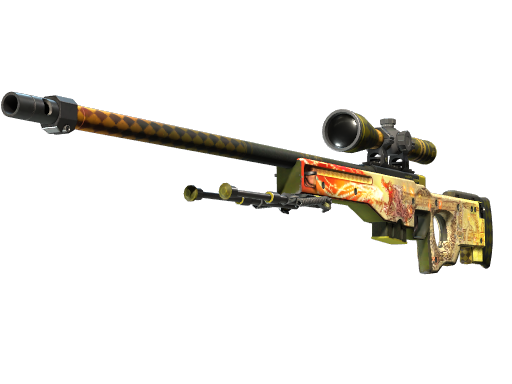
AWP | Dragon Lore
AK-47 | Case HardenedValve Corporation / Steam Community Market — Counter-Strike 2 item render. Used for editorial identification.Steam Community Market ↗
Dragon Lore is perhaps the cleanest example of a skin that became a cultural object. It is visible, legible to non-collectors and deeply connected to tournament-era souvenir lore. Its historic headline sale was not for a generic Dragon Lore: it was a souvenir example tied to Skadoodle’s autograph.
AK-47 | Wild Lotus
AWP | Dragon LoreValve Corporation / Steam Community Market — Counter-Strike 2 item render. Used for editorial identification.Steam Community Market ↗
Wild Lotus illustrates how an already desirable finish can become something else entirely when combined with historic holographic stickers. In 2023, a Factory New example with four Reason Holo Katowice 2014 stickers was reported sold for ¥1,095,000, roughly $160,000 at the time.
M4A4 | Howl
AK-47 | Wild LotusValve Corporation / Steam Community Market — Counter-Strike 2 item render. Used for editorial identification.Steam Community Market ↗
Howl is a useful reminder that collector value is partly historical memory. It is one of the names players recognise immediately even before learning about float values or sticker placement. A recognisable name still does not tell you the exact item’s realistic sale price.
AWP | Gungnir
M4A4 | HowlValve Corporation / Steam Community Market — Counter-Strike 2 item render. Used for editorial identification.Steam Community Market ↗
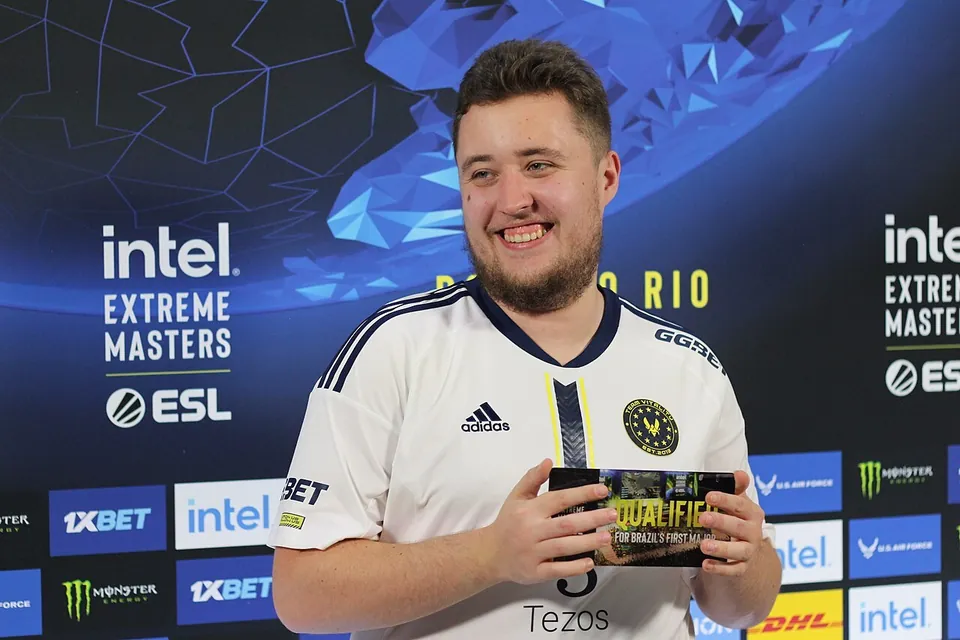
Gungnir is a modern prestige skin with a visible place in pro and creator loadouts. In a 2022 interview, ZywOo explained that he rented high-end skins rather than owned every item people could see in his inventory. Seeing a star use a skin does not prove that the player owns it.
AK-47 | Fire Serpent
AWP | GungnirValve Corporation / Steam Community Market — Counter-Strike 2 item render. Used for editorial identification.Steam Community Market ↗
Fire Serpent demonstrates the value of longevity. It is not a one-week trend; it is an old-school collector name with a broad enough audience to be discussed beyond one narrow pattern niche. Even so, condition and the venue of sale decide what a real buyer will pay.
The record book: prices that were reported as sales
AK-47 | Fire SerpentValve Corporation / Steam Community Market — Counter-Strike 2 item render. Used for editorial identification.Steam Community Market ↗
The high-end market is not a regulated exchange with a universal public tape of every cash transaction. Large deals can be brokered privately; the buyer may stay anonymous; the precise consideration may be withheld. That is why careful wording matters.
In June 2024, brokers announced a completed private sale of a StatTrak Factory New AK-47 | Case Hardened, pattern #661. The exact price and buyer were not disclosed. Reporting supports the formulation “more than $1 million,” because $1 million offers had reportedly been rejected before the deal. It is the strongest public claim for a completed single-skin sale, not evidence of a precise $1.5m or $2m transaction.
In April 2023, a StatTrak Minimal Wear AK-47 | Case Hardened #661 with four Titan Holo Katowice 2014 stickers was reported as part of a package worth over $500,000. The broker attributed about $400,000 to the AK. Treat it as a broker-reported transaction rather than an audited public-market print.
In March 2023, a Factory New AK-47 | Wild Lotus with four Reason Holo Katowice 2014 stickers was reported sold for ¥1,095,000—about $160,000 at the time. That was a specific four-sticker craft, not a generic Wild Lotus.
In January 2018, a Souvenir AWP | Dragon Lore connected to Skadoodle’s autograph was reported sold for $61,052.63. It remains a landmark documented deal for its era.
There is an equally important non-entry. A Factory New Karambit | Case Hardened pattern #387 is often attached to a figure around $1.5 million. The widely repeated figure relates to a rejected offer or valuation, not a completed sale. Calling it “sold for $1.5 million” turns a useful warning into misinformation.
Price snapshot: the numbers people mix up
On 19 October 2026, the official Steam Market pages showed high buy requests including $2,257.50 for Factory New Dragon Lore, $2,219.96 for Factory New Howl and Gungnir, and $2,184.39 for Factory New Fire Serpent. These were visible wallet-funded buy orders at that moment—not independent cash valuations and not proof that an item can be sold instantly for that amount.
Steam’s current FAQ describes a Wallet balance limit of around US$2,000 and a maximum single listing of around US$1,800, with associated-account Wallet balances aggregated for that limit. That helps explain why exceptional items are often discussed through private collector sales instead of normal Steam listings.
Before quoting any price, identify what it is: a last completed sale, a current ask, a buy order, a broker estimate or a private cash quote. The spread between those can be huge. The spread is the cost of impatience.
How the official Steam Community Market works
Steam describes the Community Market as a place where users buy and sell eligible items for Steam Wallet funds. It is official, integrated and visible, but it is not a cash-out exchange. Wallet proceeds do not turn into a bank transfer simply because an item sells.
Fees change the arithmetic. Steam’s current FAQ lists a 5 percent Steam Transaction Fee and a 10 percent Counter-Strike game-specific fee, subject to minimums and rounding. A seller should calculate the net before treating a headline list price as profit. A small rise can disappear once all fees are considered.
Steam also has access and security requirements. Its current guidance says a successful Steam purchase needs to be more than seven days old and less than one year old, and Steam Guard needs to have been enabled for 15 days before Community Market access. The details may change; the broader lesson does not: the official market trades flexibility for safeguards and Wallet-only settlement.
Other markets and case-opening services
There are other ways people exchange CS2 items for money or for other items. This article does not name or promote any third-party marketplace or case-opening service. The point is to understand the trade-off, not send readers to a website.
Peer-to-peer cash marketplaces may offer cash denominated prices and more flexibility for high-value items, but they introduce a counterparty, payment process, fees, potential regional restrictions, support limits and an item-transfer process to evaluate. Instant-sell or bot-trade services prioritise speed; in practice, the seller pays for immediate liquidity by accepting a lower price than a patient collector might pay. Private brokers can help match high-value buyers and sellers, but a broker is not a magical guarantee of payment, custody or recovery.
A random-item or case-opening service is not the Steam Community Market, and it is not a skin investment product. It turns money or value into a chance-based result. Age, local law, operator terms, odds, withdrawal rules and account security can all matter. Valve’s 2016 statement says it has no business or revenue relationship with gambling sites, and that using Steam OpenID, automated Steam accounts or web calls to run a gambling business is not allowed under Valve’s agreements.
Why people hold skins like a portfolio
There are understandable reasons to be a long-term collector. Some people enjoy using the items. Some understand a collection’s supply better than the average buyer. Some prefer old designs or tournament-era stickers that cannot be recreated in the same way. Others expect a Major, a creator trend, a player’s popularity or renewed interest in CS2 to expand demand.
But the risk list is just as real. Prices can change after updates, policy changes or shifts in mood. High-end pieces may be thinly traded. A desired sale can take weeks or months. Fees matter. The official market is Wallet-based, not a cash-out channel. Private cash deals carry fraud and dispute risk that Steam explicitly says it may not recover. A peer-reviewed 2025 study of Counter-Strike cosmetic portfolios found historically strong returns in some conditions, while flagging high fees, high volatility and uncertain long-term prospects.
The balanced conclusion is simple: it is understandable to analyse skins like investments, but there is no safe shortcut from a graph to a profit.
Esports loadouts, rentals and collector loans
Tournament broadcasts made high-end skins culturally important. A star player’s AWP shot can turn an item into part of a memorable moment. Creators inspect it on stream; viewers identify it; fans ask whether it is a “pro skin.”
A pro inventory is not always a personal vault. ZywOo said in 2022 that he rented high-end skins rather than owned all the expensive items viewers could see. Reporting around Major events has described collectors lending rare skins for temporary public showcase. One reported example said s1mple used a loaned StatTrak Ursus Knife | Crimson Web at the Antwerp Major and returned it afterwards.
The arrangement can make sense: the collector gets visibility, the player gets a stage-ready loadout and the broadcast gains visual character. It is a community practice, not a Valve-endorsed lending feature. Private loans still operate through ordinary Steam trading rules.
Current CS2 Trade Protection means an item received in a trade is protected for seven days. It can be equipped and used, but cannot be consumed, modified or transferred during that time. Eligible trades can be reversed in that window; the account that reverses them receives a 30-day trade and Community Market cooldown. That is a security feature, not an escrow service for private loans.
Hoarding, hype and thin liquidity
Hoarding is not automatically wrongdoing. A player may collect every example of a favourite finish because they love it. Valve has not published a public rule that bans holding or buying a scarce kind of skin.
The problem starts when scarcity is used to make a market look more liquid, more organic or more certain than it is. In a thin market, a coordinated group can accumulate the lowest visible listings and make the next ask look dramatically higher. That does not prove the new price is fake, but it does mean the visible ask can reflect a thin order book rather than broad demand.
Price anchoring is another problem. An owner may point to a very high listing to frame a lower price as a bargain. Repeated transfers or sales among connected accounts can create signals that resemble demand. A patch, streamer, Major or viral post can produce real demand—and fear of missing out. None of these signs alone prove misconduct, so this article does not accuse named people or communities. They are risk patterns, not verdicts.
The reader’s defence is market literacy. Compare completed sales rather than only asks. Check whether float, pattern, exterior and sticker placement actually match. Look for different buyers over time, not one screenshot. Inspect the exact item through legitimate Steam data and its inspect link. Treat unverified private screenshots as claims, not facts.
What Valve and Steam actually do
Valve does not publish a programme that sets fair prices, guarantees profit, limits how many rare skins a collector may own or declares every sudden spike to be manipulation. Normal buying, holding and collecting are part of the economy.
What Steam does publish are anti-fraud and speed-control measures. Trade offers, accepted trades and Community Market listings require email or mobile confirmation. Without a Mobile Authenticator in place for seven days, outgoing items can be held for up to 15 days; Steam says this gives users time to notice a compromise. Cancelling a held trade triggers a seven-day trading cooldown.
CS2 Trade Protection adds a seven-day reversal window for items received in trades. Wallet and listing caps place practical friction in front of rapid high-value official-Market activity, although Valve does not say those caps exist to stop hoarding. The Subscriber Agreement also prohibits scripts, bots, macros and other non-human-controlled systems from interacting with Steam in prohibited ways, including Marketplace processes. Steam says confirmed scammers can be banned from Community, trading and the Market, sometimes across accounts.
Steam’s support pages also make a crucial limit clear: direct cash sales outside the Community Market are outside its recommended practices; cash offers are frequently scams; and Steam may not restore items that leave an account. Steam explains that restoring or duplicating items would harm the scarcity and value of existing items.
A practical anti-scam and anti-FOMO checklist
Use the real Steam domain and your own bookmark, not a sign-in link in a direct message, comment or pop-up.
Keep Steam Guard active. Treat an authenticator as a basic security tool.
Inspect the exact item: exterior, float, pattern, StatTrak status, sticker state and provenance.
Compare completed sales, not only listings.
Separate Wallet value from cash value; they are different markets with different fees and risks.
Do not hand over an item because someone promises payment later. A screenshot is not settlement.
Do not lend without clear terms and an understanding of Trade Protection.
Do not treat a random case opening as an investment strategy.
Pause when a deal feels urgent. “You must trade now” is often a scammer’s strongest tool.
Independently verify any unexpected login page, API-looking page, support message or middleman claim.
The case economy and what comes next
Cases are a supply engine. Every opened case introduces potential skins, knives or gloves into the ecosystem. Every Trade Up contract changes lower-tier supply into a chance at a higher-tier item. Every update that changes access or attention can change what collectors think supply means.
That is why a case can matter to a skin price even if the reader never opens one. If players expect fewer items of a certain type to enter the ecosystem, they may bid more for existing examples. If a collection goes viral after an update or creator trend, old items can move before an underlying supply fact has changed. The responsible conclusion is not “buy cases now.” It is that supply narratives affect demand, and supply narratives can be wrong.
The CS2 skin market will keep being shaped by updates and item mechanics, esports visibility, the gap between official Wallet prices and cash-market quotes, security friction and better market literacy. Valve can change the rules of acquisition, trading or protection. A Major can make a skin visible to a new audience. Steam’s limits mean the very top end will continue to be discussed separately from ordinary Community Market prices.
Bottom line
The CS2 skin market sits between fashion, fandom, statistics, game design and finance. A Dragon Lore can be a beautiful AWP finish, a tournament souvenir, a broadcast symbol and a collector asset at the same time. A Case Hardened AK can be a normal skin or a seven-figure headline depending on a pattern seed, condition and sticker history. A pro’s expensive inventory can be personal property, rented equipment or a collector loan.
That complexity is the attraction—and the warning. The smart reader does not chase every spike, believe every screenshot or call every rare item an investment. They ask what exactly is being sold, who actually bought it, which platform rules apply, how liquid it is and what would have to be true for the next buyer to agree.
Skins can be art, identity and serious collecting. They can also be volatile digital items in a platform-controlled economy. Both things can be true.
Cover image credit
The cover uses a representative official render of AWP | Dragon Lore from Valve Corporation / Steam Community Market, accessed 19 October 2026. It is for editorial identification only, not necessarily the exact pattern, float or item involved in a reported sale, and is not AI-generated.