Automated narration using browser voices. Quality and availability vary by device; your voice provider may use an online service.
From Cologne’s unforgettable Cache clutch to Stockholm and the later comeback: an in-depth study of s1mple’s peak, teammates, setbacks and legacy.
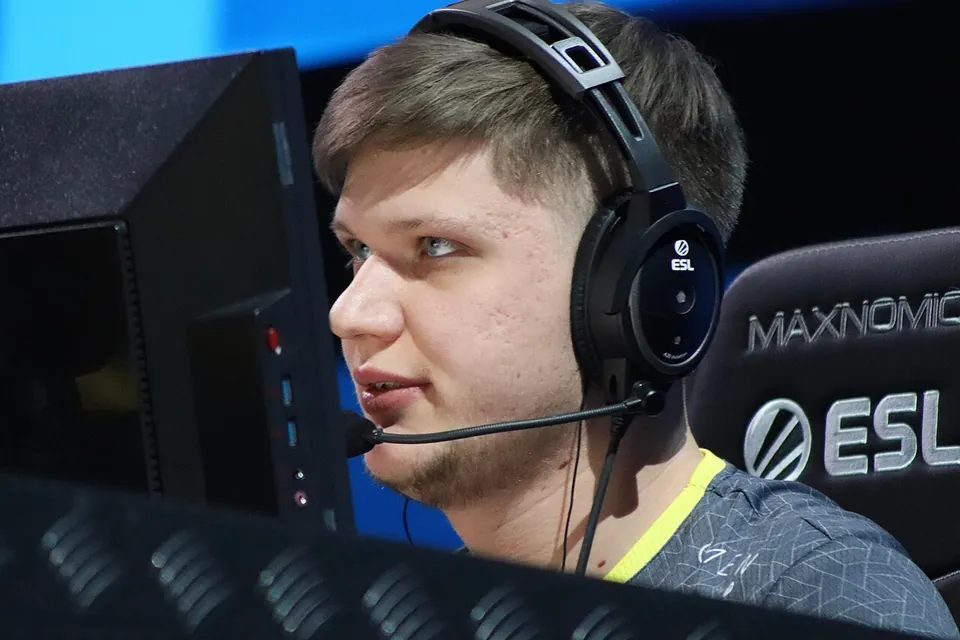
s1mple in March 2019. Archive photograph by Esports Kingdom, resized. Esports Kingdom · Original image · CC BY 2.0 · Resized and compressed for publication.In this article
There are Counter-Strike highlights that show a player winning a round, and others that change what spectators believe a player might attempt. Oleksandr “s1mple” Kostyliev built a career around that second feeling. The opponent could have the stronger position, the safer route and the apparent advantage, yet the round still refused to feel finished.
That reputation can obscure the player as easily as it celebrates him. A montage removes the failed attempts, the teammate’s flash, the economic consequences and the ordinary rounds that make a championship possible. To understand s1mple, we have to put those things back: the rise, the extraordinary peak, the team that finally won the Major, and the difficulty of returning after time away.
This is a retrospective built around verified milestones through his 2025 transfer, not a claim that historical greatness guarantees his current ranking. Tactical passages are Mghamer’s interpretation and a framework for watching Counter-Strike. They do not represent private team communications or an undisclosed statistical tracking study.
Liquid and the moment the world could not ignore
Team Liquid announced s1mple’s arrival in January 2016. For a young Ukrainian player, competing in a North American organisation was already a significant change of context. Talent had to function inside another team’s routines and expectations, rather than remaining an abstract promise attached to an individual name.
At ESL One Cologne that year, the Cache clutch against fnatic became the image that followed him everywhere: dropping from the elevated position at B and landing two unscoped AWP kills in a one-versus-two. ESL’s retrospective places the moment within Liquid’s run to the Major final, where they faced SK Gaming.
The clip deserves its fame, but it should be taught carefully. A successful low-percentage sequence is not automatically a sensible default decision. Its lasting significance is the extraordinary execution under pressure, not proof that every player should copy the jump. Great sports moments often sit at the boundary between what can be prepared and what must be improvised.
NAVI: an identity becomes a long project
In August 2016, NAVI signed s1mple to replace Zeus. The move connected an exceptional individual to an organisation with its own Counter-Strike history and expectations. It also began the much longer chapter through which most fans would understand his career, rather than a brief sequence of spectacular tournament appearances.
Joining a famous team does not settle the relationship between personal freedom and collective order. An elite player needs room to exploit information quickly, but four teammates also need to know what the resulting space means. A surprise that confuses the opponent can help; a surprise that leaves a teammate unable to trade can create a new problem.
That tension is central to studying any superstar-led lineup. It is not evidence of a specific disagreement inside NAVI. The useful question is structural: can the team convert one player’s exceptional options into predictable opportunities for everyone else? If the only plan is to wait for a miracle, the ceiling may be high while the week-to-week reliability remains fragile.
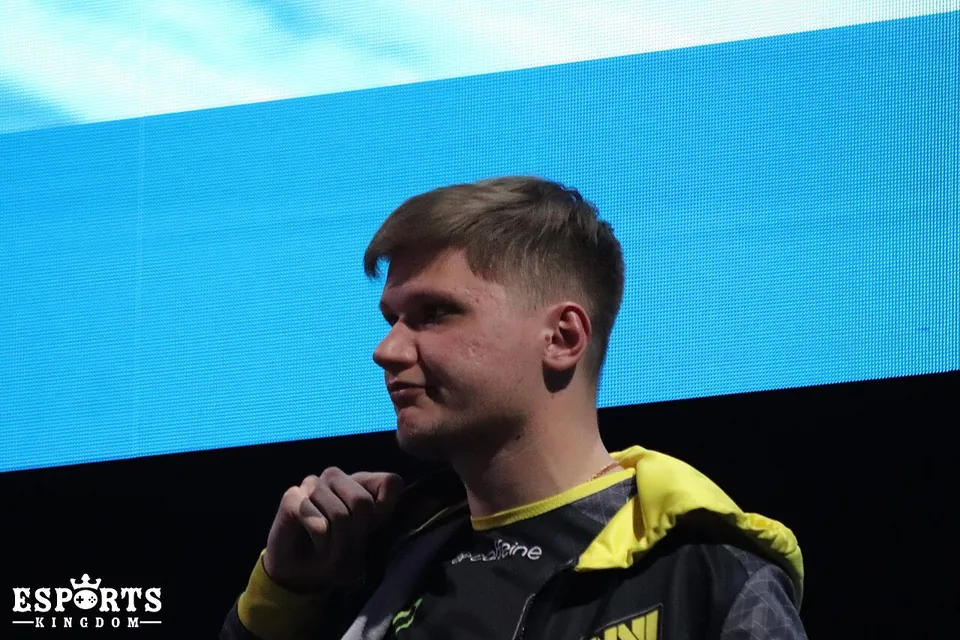
s1mple at IEM Katowice 2019. Archive photograph, resized. Esports Kingdom · Original image · CC BY 2.0 · Resized and compressed for publication.
2018: being the best is not the same as owning every trophy
HLTV ranked s1mple first for 2018. The award gives his peak a documented historical anchor rather than leaving it entirely to memory or favourite clips. It also invites an important distinction: the best individual season and the strongest team season are different propositions, measured through related but non-identical evidence.
A star can create a disproportionate number of chances without controlling every rotation or every teammate’s duel. Equally, strong individual statistics do not place every decision beyond criticism. The productive middle ground is to examine both contribution and cost. What did the player create? What resources enabled it? What did the team gain after the first success?
For s1mple, this makes the pre-Major years more interesting than a simple waiting room before eventual validation. They are part of the evidence for his ability. Later silverware changed the shape of the story, but it did not retroactively invent the performances that had already made him a defining player of his generation.
MGHAMER / CAREER FILE 02
A career beyond one highlight
Selected s1mple milestones • 2016–2025
2016Liquid → NAVIAn international breakthrough
2018HLTV #1First annual No. 1
2021STOCKHOLMMajor champion & event MVP
2022HLTV #1Third annual No. 1
2023BREAKSteps away from competition
2025FaZe → BC.GameLoan, then permanent transfer
Sources: Liquid and NAVI announcements and the linked HLTV reporting. Selected milestones, not a complete list of events or teams.
The mechanics of making an opponent hesitate
An aggressive AWP threat can influence a round before firing. If an opponent believes a dangerous angle might be occupied, that opponent may spend a flash, delay a route or assign a second player to secure the fight. The threat has already changed the distribution of time and resources on the map.
This is a useful analytical lens for s1mple’s most compelling Counter-Strike. The value of initiative is not simply “taking more duels.” It is creating uncertainty while retaining enough information to act on the opponent’s response. A second position after an opening shot can be more important than the speed of the initial flick.
There is a price. Moving early can leave a gap. Repeating a peek can expose an expensive weapon. Seeking information can remove a player from a later defensive setup. Our diagram presents those trade-offs conceptually, without pretending to measure his personal aggression on an invented scale. The right question is whether the risk served the round’s objective and the team’s available support.
MGHAMER / THE ROUND, EXPLAINED
Initiative has value—and a cost
Mghamer analytical diagram • not tracking data or an actual map
01INITIATIVEAsk the opponent a question
Do they spend utility or change their route?
02RESPONSEUse the new information
A new position may be worth more than a second shot.
03COSTAccount for what is at risk
The weapon, the space and the teammate’s trade.
A framework for watching and discussing decisions, not a fixed playbook or statistical player rating.
Stockholm 2021: the individual peak meets the team achievement
NAVI won PGL Major Stockholm 2021, defeating G2 in the final without dropping a map across the tournament. After years in which s1mple’s name had been inseparable from the argument about individual greatness, the most important missing team title finally became part of his record.
HLTV’s contemporary MVP feature reported a 1.47 tournament rating over ten maps. The figure belongs to that event and the historical reporting context; it is not a universal conversion rate for comparing every era of Counter-Strike. Its value here is to show how exceptional the individual performance was within the championship run being discussed.
The temptation is to narrate Stockholm as one man finally overpowering history. That misses why it was a team breakthrough. Winning a Major requires repeatable rounds, purchases that remain workable, and several players who can finish a fight when the headline name cannot. The star’s brilliance and the team’s strength are complementary explanations, not competing claims to the same trophy.
The teammates must remain in the picture
PGL’s official Stockholm roster lists s1mple, electronic, b1t, Perfecto and Boombl4, with B1ad3 as coach. Naming all six matters. The championship was delivered by a particular group, not by a timeless “NAVI system” that would have produced an identical result regardless of the people doing the work.
NAVI’s own history records that s1mple, electronic and b1t all finished inside HLTV’s top ten for 2021. That is a useful correction to the image of one extraordinary player surrounded by anonymous assistance. The championship side contained other elite performers whose contribution cannot be reduced to keeping the AWP supplied.
For the viewer, the broader lesson is to follow the player the broadcast is not showing. A teammate can hold a difficult position, retain utility for the late round, or force a rotation that makes the star’s next duel possible. None of that requires denying the unusual skill needed to convert the resulting opportunity.
Coaching and leadership matter through the same mechanism: they make separate actions coherent. We cannot attribute a specific call to a staff member without a source, but we can recognise the general problem being solved. A successful system must leave room for exceptional initiative while preventing every round from depending on exceptional rescue. Stockholm is best remembered with that balance intact.
2022: another No. 1, and visible limits
The 2022 HLTV award made s1mple the first player to finish first three times, following 2018 and 2021. Yet that season also contained Major-final defeat to FaZe in Antwerp and a five-map Cologne final lost to the same opponent. Personal recognition and painful team losses coexisted.
Those defeats should not be edited out of a deep profile. They remind us that being historically exceptional does not remove the opponent’s agency. Another team can solve enough rounds, exploit enough openings and execute more reliably in decisive moments. Explaining a loss solely through the famous player’s mood is not analysis.
There is also a lesson about standards. Once a player becomes associated with impossible recoveries, normal failure starts to look like decline. A missed opportunity becomes a referendum on a career. Responsible evaluation resists that compression. It asks about the match, the role and the sample before turning one disappointment into a permanent verdict.
The break and the problem of returning to a changing game
In October 2023, s1mple announced a break from competition and discussed the possibility of a role change. That is the documented starting point for understanding his absence. It should not become an invitation to invent a medical explanation, reduce personal circumstances to a joke, or assume that a player owes the public every private detail.
Returning presents a competitive problem even for an all-time great. Teammates establish new habits, opponents develop new responses, and a different game version changes the context in which familiar skills are used. Experience remains valuable, but it cannot substitute completely for recent repetitions against the relevant opposition.
This is why a comeback should be evaluated as a process rather than a trailer. One brilliant map can show that a weapon still exists in the arsenal. It cannot by itself establish how consistently that weapon will work across a schedule. Equally, one difficult match cannot prove that years of knowledge have suddenly become worthless.
FaZe and the 2025 move: separate evidence from nostalgia
FaZe borrowed s1mple in May 2025 before the Austin Major. He helped the team reach the playoffs, including a qualifying victory over The MongolZ. That was meaningful competitive evidence from a temporary arrangement, but reaching a playoff is not the same achievement as winning the event or completing a full season with a stable roster.
In July 2025, BC.Game signed him permanently from NAVI. The move closed the long organisational chapter that began in 2016 and created a different setting for the next part of his career. The team name is included as a historical fact, not a commercial recommendation or an affiliate promotion.
The right question after such a move is not whether a famous name makes the project automatically elite. It is whether the team produces repeatable improvements against appropriate opposition. Look for several events, a clear role and the quality of the victories. Reputation can attract attention immediately; competitive standing has to be demonstrated again through matches.
s1mple on stage at IEM Katowice, March 2019. Archive photograph; not an image of his 2025 return. Esports Kingdom · Original image · CC BY 2.0 · Resized and compressed for publication.
How to judge the comeback fairly
Start by separating three questions. Does he still produce exceptional moments? Does he deliver strong performances regularly against high-level opponents? Does his team turn those performances into deep runs? Each question needs different evidence, and an affirmative answer to the first does not settle the other two.
Then examine the denominators behind any statistic. A rating over a few maps against weaker opposition should not be placed beside a full elite season without explanation. Game versions and rating formulas matter as well. A larger-looking number may describe a different calculation, not a higher level of play. Context is part of the statistic, not an optional footnote.
Finally, preserve the distinction between historical standing and present form. A difficult current period does not erase Stockholm. Stockholm does not guarantee a current place at the top. Both statements can be true, and accepting that makes it possible to follow a comeback with curiosity rather than treating every result as a demand to worship or dismiss the player.
The legacy: possibility, with consequences
s1mple’s enduring appeal is the feeling that a round still contains possibilities other players might never attempt. But the deepest appreciation of that gift includes its conditions: preparation, information, mechanical execution, teammates and the consequences of failure. The spectacular action belongs to a larger competitive system.
For a developing player, copying a famous clip is the least complete lesson. Study what was known before the move and what the move risked. Ask whether a teammate could trade, whether the objective required urgency, and whether the same decision would still make sense without the knowledge that the shot eventually landed.
That is the difference between remembering a legend and understanding one. The Cache highlight remains extraordinary. The Stockholm championship remains decisive. The later uncertainty remains part of the story. A serious profile can hold all three without pretending that a great career must be flawless, finished or permanently fixed at its highest point.