How much money is in esports? Follow the cash beyond the prize pool
4 min read
MAKE IT YOUR READSaved
From a $75 million prize-pool announcement to VCT team payments, here is how esports money works—and why big numbers do not guarantee profit.
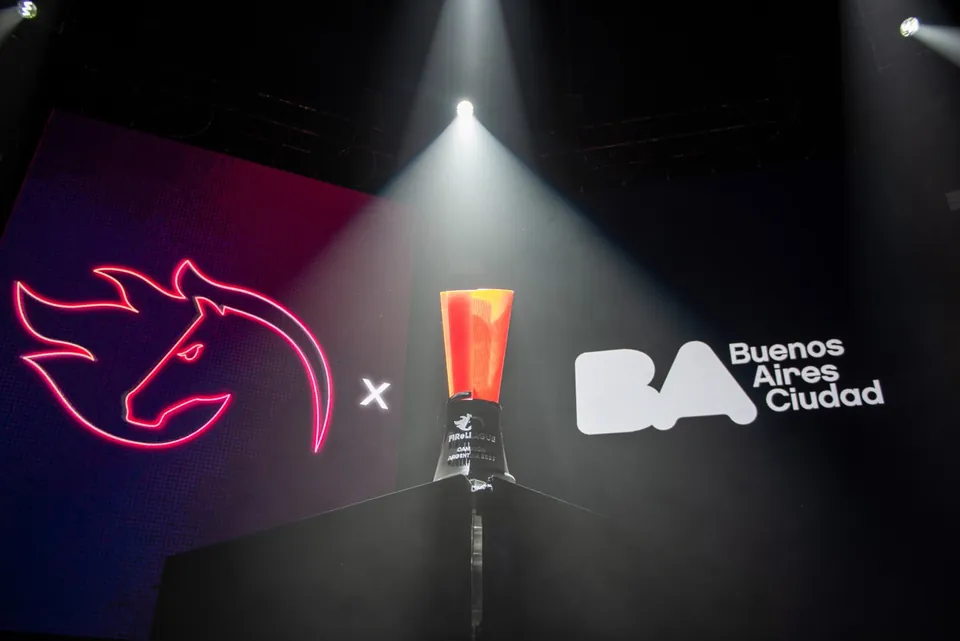
A player lifts a trophy, confetti falls, and a cheque fills the screen. It is esports’ easiest financial story to understand. It is also only one part of the business. Behind the final are team payrolls, sponsor contracts, broadcast crews, digital items and investors who expect very different things from their money.
So how much money is in esports? There is no honest single total to be made by adding the biggest headlines together. Tournament prizes, annual revenue and the purchase price of a company measure different things. A useful answer starts by following the cash to its recipient.
Three figures that show the scale—and the differences
The Esports World Cup’s June 2026 announcement advertised a $75 million prize pool across the event. That is an announced competition allocation, not a measure of ticket sales, profit or the entire esports economy.
Riot’s VCT 2025 season review reported $105.2 million shared with teams, including more than $86 million from digital goods. The digital-goods amount is part of the total; adding them would count the same money twice. These are publisher-reported team distributions, not the value of VALORANT as a game.
For wider gaming context, Microsoft reported $23.455 billion in gaming revenue for its financial year ended June 30, 2025. That includes a much broader business than professional competition. It should never be presented as esports revenue.
Together, those examples explain why a giant gaming headline tells you little about whether an individual club can pay next month’s salaries.
Where teams get their money
Teams can sell sponsorship packages, produce branded content, earn a share of publisher programmes, sell merchandise and win prize money. Some also build businesses around creators or services. The mix differs by organisation and game; public information rarely reveals every contract.
A sponsor is buying access to an audience and an association with a brand. A fan buying an eligible team item can help fund a publisher’s distribution programme. Prize money depends on results and eligibility. These income streams have different levels of predictability, and revenue received by an organisation is not automatically take-home pay for its players.
Riot’s 2023 discussion of esports sustainability described both sponsorship pressures and the potential of digital content. The business lesson remains useful: recurring fan spending can support a competition more reliably than assuming every team will win a major trophy.
Why a rich tournament does not make every team profitable
Consider a hypothetical club with $1 million in annual revenue and $1.2 million in costs. It loses $200,000 before any other adjustments. The revenue headline can be impressive while the operation still needs funding.
Players, coaches, travel, accommodation, content production and administration all cost money. A prize pool also has to be distributed according to tournament rules and then any applicable contracts. The number on stage is not a personal salary, and a single strong finish cannot guarantee next season’s budget.
Timing matters too. A club can have a signed commercial agreement while waiting for payment. Winning matches, reporting revenue and having cash available are three separate questions.
Investment and acquisitions are another category
Savvy’s acquisition of Scopely was valued at $4.9 billion and closed in July 2023, according to Scopely. That was a transaction involving a games company, not an esports prize fund or an annual revenue figure.
An investment may finance expansion or cover a shortfall. An acquisition changes ownership. Neither, on its own, proves that the underlying operation generates sustainable profits. Readers should ask whether a figure describes money earned, money invested, or the price paid for ownership.
What Arab esports fans should watch
For MENA clubs, the meaningful questions extend beyond signing famous players: are sponsors renewing, is content building a returning audience, and are there dependable routes for local talent? For organisers, repeat participation and useful commercial relationships matter alongside a headline prize.
Our view: the strongest esports business is one that can keep serving fans between finals. Follow the trophies, but also follow who pays, who receives the money, and what remains after costs.
Figures checked October 6, 2026. Historical periods are stated explicitly. This explainer does not estimate total global esports revenue or infer private team salaries.
Sources & further reading
- Riot Games — VCT 2025 season wrap-upvalorantesports.com
- Esports World Cup — June 2026 announcement of $75 million prize poolprnewswire.com
- Microsoft — 2025 Annual Report (year ended June 30, 2025)microsoft.com
- Scopely — Savvy acquisition, completed July 12, 2023scopely.com
- Riot Games — building a sustainable esports businessriotgames.com
What did you take away?
Real reactions. Thoughtful discussion. Every comment is reviewed before it appears.
Loading reader contributions…
Sign in to join the discussion