CS2 Beginner Guide: Win the Round, Not Just the Duel
4 min read
Part of the beginner collection — explore all 10 guides ↗
MAKE IT YOUR READSaved
Learn bomb objectives, team buying, useful communication and a seven-day CS2 practice plan for MENA players.
Your first useful contribution in Counter-Strike 2 might be a sentence: “The bomb is here.” You do not need spectacular aim to protect information, stay close enough to support a teammate or avoid buying when everyone else is saving. This guide builds those habits before asking you to master a highlight reel.
The exercises below are Mghamer's suggested practice approach. They are not Valve rules or a promise of a particular rank. Start with the equipment you have, and concentrate on a small set of decisions you can repeat.
Understand the round and your purchase
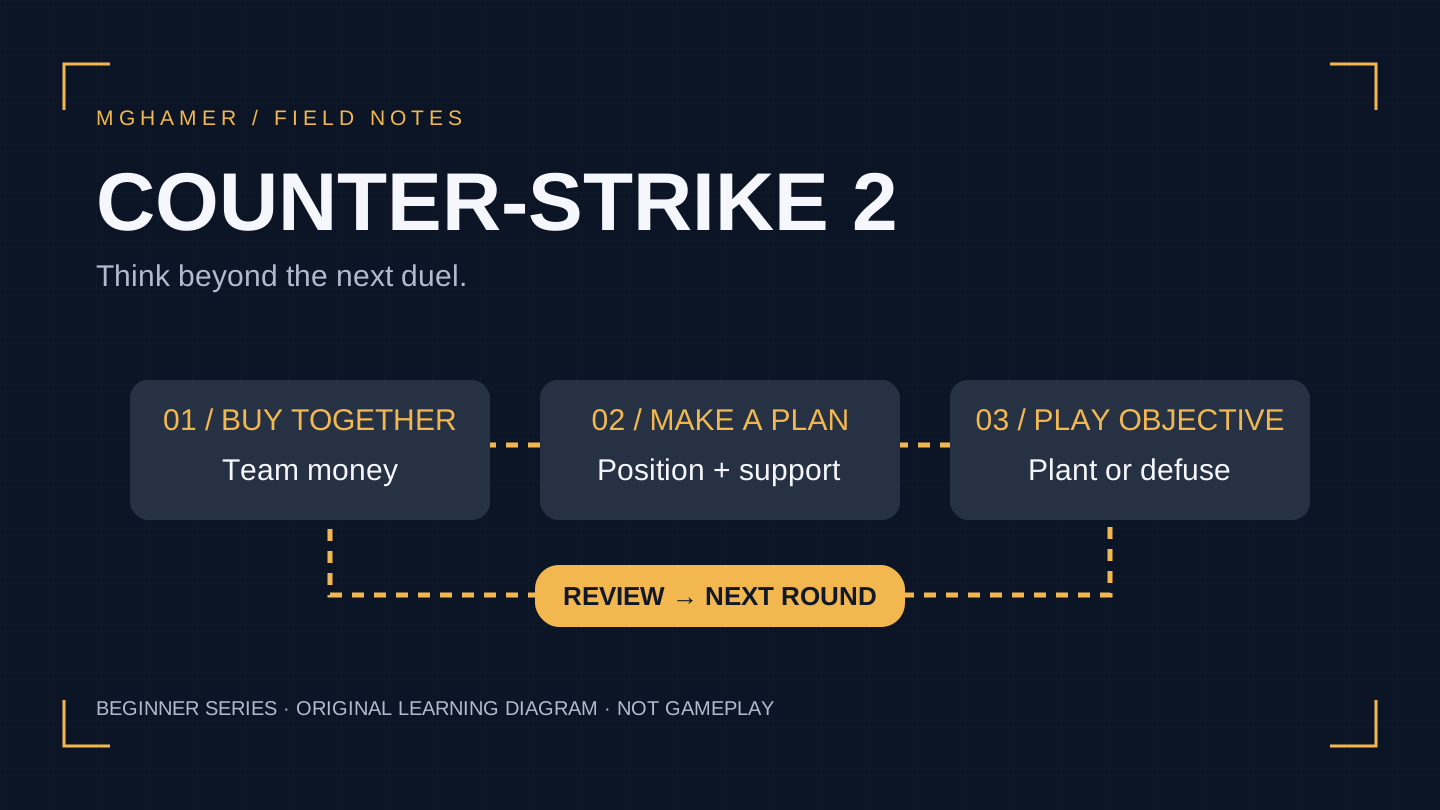
In bomb-defusal play, the attacking side tries to plant and detonate the bomb; defenders prevent that or defuse it. Once the bomb is planted, eliminating the attackers does not remove the need to defuse. Weapons, protection and utility compete for your team's limited money. Treat the objective and the purchase together: a rifle is a tool for winning the round, not the round itself.
The base game is free. Valve's Prime FAQ distinguishes free access from paid Prime features, including Premier access; check its current requirements before purchasing. You can begin this learning plan without paying. A skin purchase does not complete a movement drill or teach you a map.
Prepare your connection and one map
Check Steam's current system requirements before installing. Choose graphics settings that remain comfortable during a busy round, then stop changing them after every defeat. Use a short warm-up to check sound, your microphone and whether the connection is behaving normally.
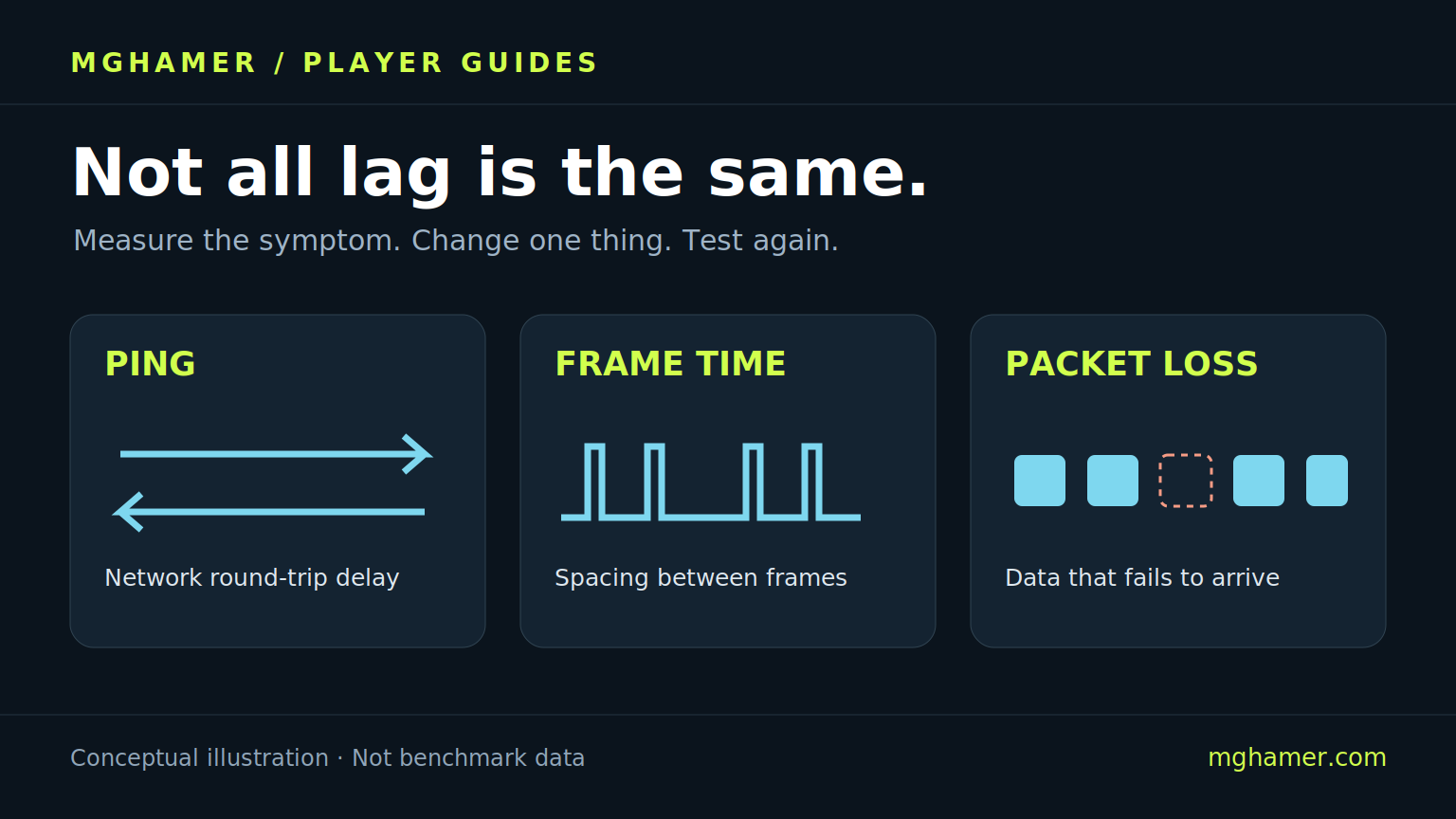
There is no universally best server for all of MENA. A player in Casablanca and a player in Amman can have different routing, and two homes in the same city can differ. Compare actual match latency and disruption at your usual playing time. If downloads are saturating the connection, pause them before judging your aim. Do not buy a networking service because somebody promises a magic regional setting.
Choose one map and draw a rough route between spawn, the two sites and the main connecting area. Learn enough names to describe where you are. Your first map notebook needs useful landmarks, not every professional callout.
Make a simple first-match plan
Before buying, ask whether the team is saving, buying together or making a limited purchase. Avoid spending everything on a weapon when your teammates cannot support the same plan. Agree on the next round's intention as well as this one. Read current prices in the buy menu rather than memorising an old screenshot.
On attack, follow a teammate at a distance that lets you respond if they meet an opponent, without blocking their movement. If carrying the bomb, know who is covering the plant and where you will go afterwards. On defence, choose a position with a retreat route. When a teammate reports contact elsewhere, ask what is actually known before abandoning your site.
Practise one useful smoke and one safe flash for your chosen route. Test them before trying them in a live match, and tell teammates before flashing an entrance they are watching. Valve's map-guide system can help explore utility; availability and mode restrictions can change, so use the current in-game menu.
Three mistakes to remove first
First, chasing the last opponent while the objective needs attention. Before moving, say what must happen for your side to win. Second, repeating the same exposed fight after losing it. Change your position or ask for support instead of treating the next duel as revenge. Third, filling voice chat with speculation after dying. Give location, number and direction when known, then leave space for living teammates to hear.
For shooting practice, use short, deliberate attempts: stop, aim at a chosen point, fire, then reset. The purpose is to notice what changed, not to produce a flattering practice score. A missed shot you can explain is more useful than an accidental success you cannot repeat.
Your first seven days
Day one: set controls and walk your map for fifteen minutes. Day two: practise the same stop-and-shoot exercise and note one recurring error. Day three: rehearse a purchase plan with a friend, including a save round. Day four: test your smoke and flash until you understand whom they help and whom they obstruct.
Day five: play with a single communication goal, such as giving only confirmed positions. Day six: review three lost rounds and identify the earliest avoidable decision, not merely the final missed shot. Day seven: repeat the first drill and write one habit to keep next week. Keep sessions manageable, take breaks and judge progress by clearer decisions rather than seven days of match results.
Sources & further reading
- Valve — CS2 on Steam and system requirementsstore.steampowered.com
- Steam Support — CS2 Prime and free accesshelp.steampowered.com
- Valve — Guns, Guides, and Gamescounter-strike.net
- Valve — Counter-Strike learning resources (legacy CS:GO fundamentals)blog.counter-strike.net
What did you take away?
Real reactions. Thoughtful discussion. Every comment is reviewed before it appears.
Loading reader contributions…
Sign in to join the discussion