VALORANT beginner guide: a focused plan for your first matches
2 min read
MAKE IT YOUR READSaved
Learn one agent, coordinate your spending and review the decisions that matter. A practical starting plan without a patch-dependent tier list.
You do not need to master every agent before you can contribute in VALORANT. A more useful starting point is a repeatable routine: choose a manageable role, make one plan with your team and review a decision after each match. The exercises below are our suggested practice approach, rather than an official ranking of agents.
Learn one job before expanding your agent pool
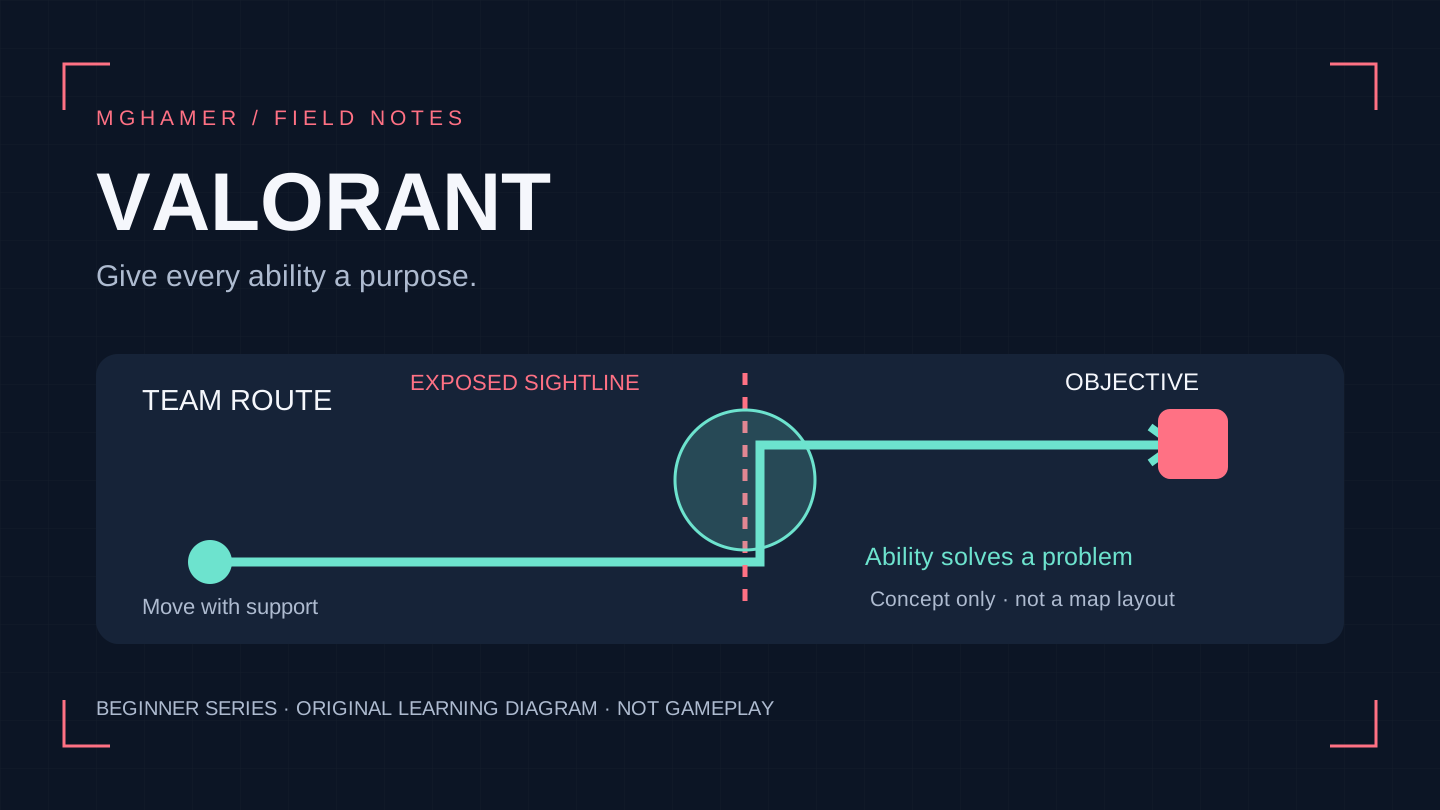
Riot groups agents into four roles. Read your chosen agent’s abilities, then ask what each one helps your teammates do. A smoke can obscure a watched angle; information can help decide where to move. Pick one simple use for an ability and practise its timing before trying complicated combinations.
Make the purchase phase a team decision
Credits determine what you can buy before a round. Look at your teammates’ purchases before spending everything. Ask whether the group intends to buy or save, and explain if you cannot afford the same equipment. A short conversation gives the team a shared plan even when the round goes badly.
Practise a specific situation
For one session, concentrate on stopping before you shoot. In another, concentrate on giving a short location call after seeing an opponent. Avoid judging the whole session by your kill count: write down whether you actually performed the behaviour you intended to practise.
Review the decision, not only the result
After a lost round, choose one question: did you enter without support, use an ability too late or act on uncertain information? Separate what you knew at the time from what became obvious afterwards. Pick one adjustment for the next match. Repeating this process is more useful than replacing your agent, sensitivity and entire strategy after every loss.
Sources & further reading
- Riot Games — VALORANT beginner’s guideplayvalorant.com
What did you take away?
Real reactions. Thoughtful discussion. Every comment is reviewed before it appears.
Loading reader contributions…
Sign in to join the discussion