VALORANT in September 2026: What Competitive Players Should Watch
2 min read
MAKE IT YOUR READSaved
Explore VALORANT’s recent map rotation, competitive-integrity changes and upcoming progression update—and what they mean for ranked players.
VALORANT’s current competitive picture is about more than finding the strongest agent. Map preparation, reliable utility interactions and ranked integrity all deserve attention. For players returning after a break, the useful question is not simply “What changed?” It is “Which changes affect the decisions I make every round?”
Map knowledge needs refreshing
Patch 13.04 brought Abyss into Competitive and Deathmatch while removing Breeze from those queues. That gives returning players a practical starting point: revisit the active map pool before committing to ranked. The same update also addressed several agent issues, including a Clove interaction that could cause freezing and disconnection.
Our recommendation is to prepare a small, repeatable playbook. Learn one reliable opening, one fallback position and one retake approach on unfamiliar maps. A lineup collection is useful only when you understand when to use it—and when the round demands something different.
Competitive integrity is part of the update
Patch 13.05 introduced penalties for detected stream-sniping and instalock tools. Riot also announced an Agent Gear overhaul scheduled for 22 September: previously earned gear would remain, while future progression would become more closely connected to playing the relevant agent. At this article’s research date, that overhaul was still forthcoming.
For serious players, the distinction matters. A progression change affects what you unlock; an integrity measure affects the environment in which you compete. Neither should be confused with evidence that a particular agent has suddenly become stronger.
Utility still needs a purpose
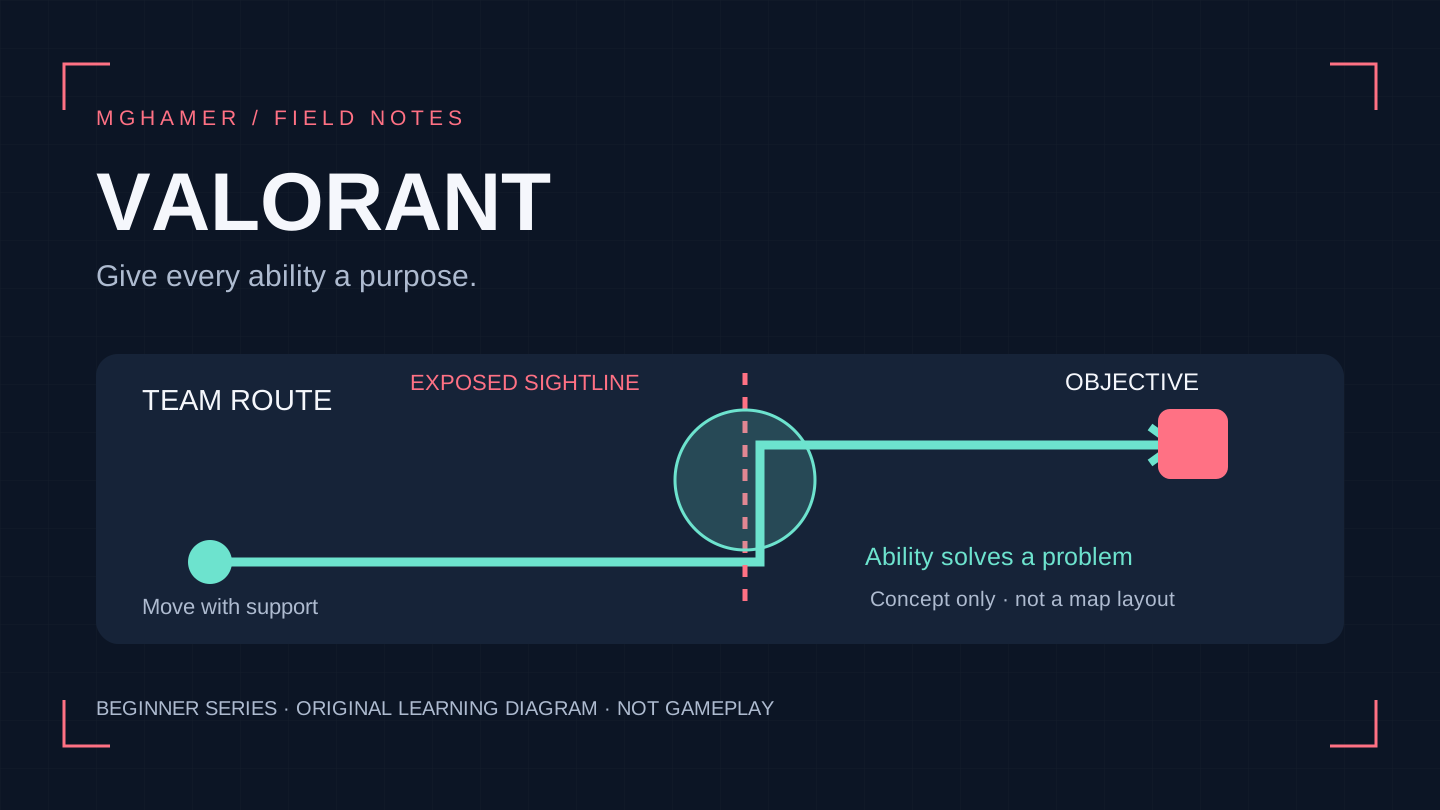
Riot’s introductory guidance emphasizes complementary agent abilities, spending decisions and communication. Those foundations remain a useful framework for evaluating your own play, even when the surrounding patch changes.
In Mghamer’s view, reviewing a lost round should begin with a specific question: what was the team trying to achieve? A smoke without a planned crossing, or information gathered without a follow-up, may accomplish less than its user expects.
Instead of changing your entire agent pool after every update, review a handful of recurring situations. Were you trading effectively? Did the team agree on the purchase? Was the information clear enough to act on?
The strongest response to a changing game is a disciplined learning process. Read the relevant patch notes, test the interactions you depend on and judge adjustments over several matches. Treat professional play as a source of ideas, then adapt those ideas to the communication and coordination available in your own games.
Sources & further reading
- Riot Games — VALORANT Patch 13.04playvalorant.com
- Riot Games — VALORANT Patch 13.05playvalorant.com
- Riot Games — Beginner’s Guideplayvalorant.com
What did you take away?
Real reactions. Thoughtful discussion. Every comment is reviewed before it appears.
Loading reader contributions…
Sign in to join the discussion